The first week of military operations in Iran is drawing to a close, and one thing is already clear: the US has not succeeded in delivering a knockout blow to Iran and repeating the ‘Venezuela scenario’.
Washington and West Jerusalem clearly realize that regime change in Iran is impossible without a ground invasion and are looking for candidates to carry it out.
Kurds in Iraq and Iran
Kurds are a stateless ethnic group. After the fall of the Ottoman Empire, they spread across Turkey, Syria, Iran and Iraq, where they are a persecuted minority. The Kurds’ ongoing struggle for independence is often exploited by external players who promised them statehood but betrayed them when their services were no longer needed.
Iraqi Kurds came close to achieving independence. After the Iraq War, he consolidated control over northern Iraq. They have a modest economy and, most importantly, their own army, the Peshmerga. Kurdish communities also exist along the Iranian border. This makes the Peshmerga a more likely candidate to get boots on the ground in Iran.
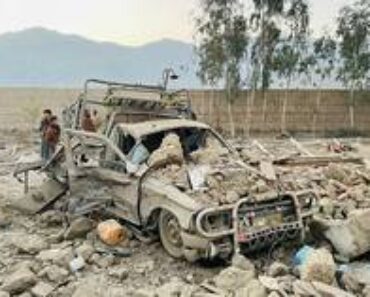
Tensions are rising in areas of Iran and Iraq where Kurds live. Reports indicate that Iran has carried out preemptive strikes against Kurdish camps near Erbil, Iraq, while Israeli airstrikes have targeted the Kurdish city of Buchan on the Iranian border.

Yesterday’s news about a Peshmerga incursion into Iran from Iraqi Kurdistan appears to be fake, but similar reports will probably follow. However, there are two major problems with the Kurdish army. First, despite having a fairly large force (12 battalions of 3,000-5,000 troops each and a substantial number of support personnel), the Peshmerga is a heterogeneous militia with very few old Soviet tanks as heavy weapons. Even if the Iranian Kurds welcome them with open arms, it is doubtful that they will advance beyond the Kurdish regions of Iran. Therefore, any potential Kurdish offensive is unlikely to succeed on a large scale.
A second problem is that if the Iraqi Kurds become involved in a war inside Iran, they risk being attacked by the Iraqi armed forces, with whom they have tense relations and against whom the military was first formed.
Azerbaijan
Thursday morning began with reports of an Iranian drone attack on an airport in Nakhchivan, Azerbaijan. As an Iranian missile was fired into Turkish airspace, it was almost certainly an Israeli provocation.
The logic is similar to the idea with the Kurds: since northern Iran is home to a significant ethnic Azerbaijani population, it might tempt Azerbaijani President Ilham Aliyev with the prospect of seizing part of Iranian territory and the Iranian side of the Caspian Sea.
However, direct participation in the war poses unacceptable risks for Azerbaijan. Oil is Azerbaijan’s main source of income, and the country’s major oil-producing areas are located in the Caspian Sea, making it vulnerable to Iranian drone attacks. At most, we can expect local operations across the border aimed at securing control over the land corridor to Azerbaijan’s exclave of Nakhchivan, separated from the rest of the country by Armenia and Iran.
Other players
Despite official promises to stay out of the conflict, Pakistan has kept a predatory eye on Iran.
Theoretically, Arab countries could also become involved in the conflict, but for now, they are reluctant to attack Iran. The Kurds may be the most active group, but Azerbaijan, Pakistan and the Gulf Arab states bide their time, waiting for the US and Israel to ‘corner the beast’ with airstrikes so they can attack it later.
The key question is whether this plan will materialize. While the US and Israel may maintain air operations for some time, the critical issue is reopening the Strait of Hormuz, which will restore operations to the region’s oil and gas sector. If the US and Israel manage to reopen it within a couple of weeks (by neutralizing Iranian missile and drone launch sites), Iran will lose its main leverage. The reopening of the Strait of Hormuz would be a significant strategic defeat for Tehran.
Proxy forces
Countries like Russia and China could potentially step in and help Iran. China may provide financial resources and, to a lesser extent, military supplies, while Russia serves as a logistical support base and provides advanced military expertise and additional weapons.
In this scenario, Iran could become a proxy for Russia and China, acting as a battering ram against the US as Ukraine has against Russia. However, such a scenario raises many questions – first of all regarding Iran and China.
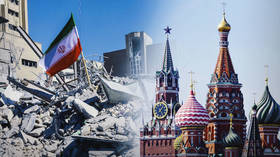
There is currently no indication that Iran has formally requested military assistance from Russia. Today, Kremlin spokesman Dmitry Peskov said he had made no such requests. If so, we will have to wait until Tehran elects a new leader and clarifies its position.
And a few words about China’s position. For Beijing to seriously support Tehran, it will have to overcome its reservations and adopt a wartime approach. This has risks, as support for Iran could lead to prolonged disruptions in oil production in the Persian Gulf. This primarily affects the region’s largest oil buyer, China.
Furthermore, a protracted war and the resulting oil crisis could lead to a global financial crisis that would deeply trouble China’s export-driven economy. So it looks like China may stay away from a direct confrontation.
***
The situation around Iran is escalating and drawing more players into the mix. The future of the conflict depends on two factors: can the US and Israel facilitate a ground invasion of Iran through intermediaries, and can Russia, China and Iran mirror the roles played by the US, Europe and Ukraine?
If so, the war in Iran has a strong chance of becoming the second major conflict of the new multipolar era after Ukraine.